Inside the profession
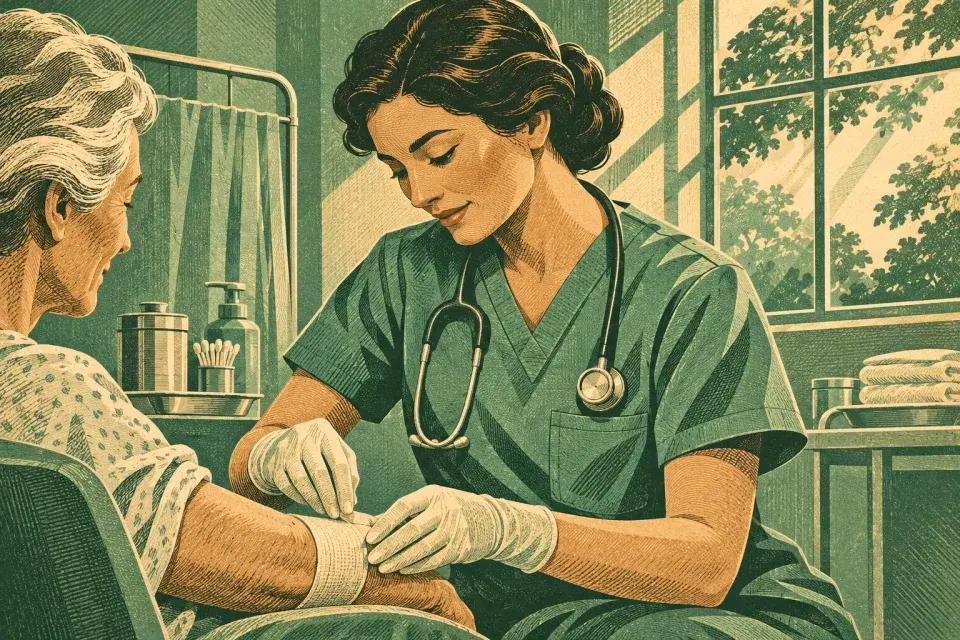
A registered nurse follows a patient’s condition over time. A change in how someone moves, speaks, or responds can shape what the care team does next. Listening and careful observation are central to the work.
What a day can involve
- Assess patients and record changes in their condition.
- Coordinate a care plan with patients, families, and the clinical team.
- Explain treatments and help people prepare to manage their care at home.
Where you might work
Hospitals, outpatient clinics, schools, and community care.
Where you can work
Industries employing this occupation in the United States, from the 2025 BLS employment matrix.
- General medical and surgical hospitals; private
- Offices of physicians
- Home healthcare services
- General medical and surgical hospitals; local
- Nursing care facilities (skilled nursing facilities)
- Federal government, excluding postal service
All reported industry sectors
- Healthcare and social assistance
- Government, excluding state and local education and hospitals
- Administrative and support and waste management and remediation services
- Educational services; state, local, and private
- Finance and insurance
- Management of companies and enterprises
- Professional, scientific, and technical services
- Other services (except public administration)
- Retail trade
- Manufacturing
- Wholesale trade
- Information
- Arts, entertainment, and recreation
- Transportation and warehousing
- Accommodation and food services
- Utilities
Your path in the United States
U.S. routes include a bachelor’s degree, associate degree, or diploma from an approved nursing program. Graduates must meet state licensing requirements, including the licensing exam.
Entry requirements · U.S. Bureau of Labor Statistics
Training to explore
Michigan’s first-year nursing route includes more than 1,000 hours of clinical experience. Check how placements fit around other commitments.
Bachelor of Science in NursingUniversity of MichiganWhat to budget for
Ask where clinical placements take place and how far you may need to travel. Budget for required uniforms, supplies, registration exams, and the hours that placements leave available for paid work.
Practise a handover
Imagine handing a volunteer shift to someone new. In one minute, describe what changed, what still needs attention, and what the next person should check. Ask them to repeat back the priorities.
Did you enjoy listening closely and deciding which details another person needed first?
Sources and context
The U.S. figures cover registered nurses (SOC 29-1141). BLS counts nurse practitioners in a separate occupation.
BLS projects 194,700 net new U.S. jobs from 2025 to 2035. Openings to replace people who leave the occupation are a separate measure. BLS projections
- U.S. Bureau of Labor Statistics · Duties and work settings
- U.S. Bureau of Labor Statistics · Entry requirements
- U.S. Bureau of Labor Statistics · National median wage
- U.S. Bureau of Labor Statistics · Employment outlook
- Where you can work
- University of Michigan · Bachelor of Science in Nursing