Inside the profession
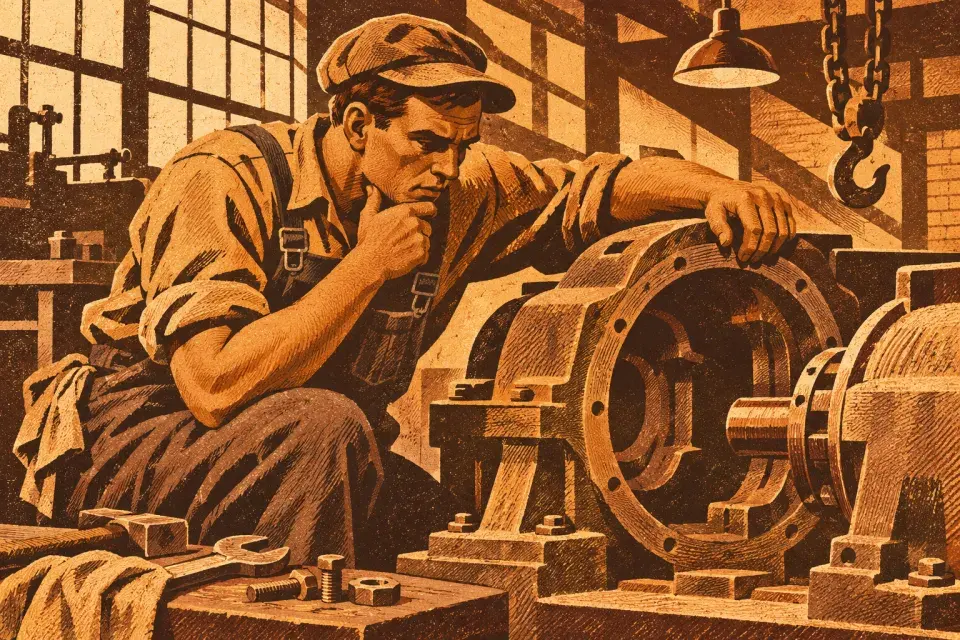
A machine operator may notice a new sound before a breakdown. The mechanic asks when it started, reads the equipment drawings, and compares the symptoms with test results. Replacing a part is only one step. The mechanic also checks the repair and records what changed so the next shift knows what to watch.
What a day can involve
- Read machinery diagrams and examine wear or unusual movement to narrow down a fault.
- Repair or replace worn components and test the equipment before returning it to service.
- Carry out scheduled inspections and record maintenance findings for the next shift.
Where you might work
Factories, processing plants, and machinery service contractors.
Where you can work
Industries employing this occupation in the United States, from the 2025 BLS employment matrix.
- Commercial and industrial machinery and equipment (except automotive and electronic) repair and maintenance
- Machinery manufacturing (3331,2,4,9)
- Plastics product manufacturing
- Motor vehicle parts manufacturing
- Chemical manufacturing (3251,2,3,9)
- Animal slaughtering and processing
All reported industry sectors
- Manufacturing
- Wholesale trade
- Other services (except public administration)
- Mining, quarrying, and oil and gas extraction
- Government, excluding state and local education and hospitals
- Utilities
- Transportation and warehousing
- Administrative and support and waste management and remediation services
- Construction
- Real estate and rental and leasing
- Professional, scientific, and technical services
- Management of companies and enterprises
- Agriculture, forestry, fishing, and hunting
- Educational services; state, local, and private
- Retail trade
- Arts, entertainment, and recreation
- Healthcare and social assistance
- Accommodation and food services
- Finance and insurance
Your path in the United States
A high school diploma or equivalent is typical, followed by hands-on training with an employer. Some mechanics earn an associate degree in industrial maintenance. Ask how much time students spend diagnosing an unfamiliar fault on real equipment.
Entry requirements · U.S. Bureau of Labor Statistics
Training to explore
Clackamas teaches mechanical and electrical maintenance for manufacturing equipment. Its catalog lists the courses for the associate degree.
Industrial Maintenance TechnologyClackamas Community CollegeWhat to budget for
Ask what tools and protective equipment a trainee must buy and which are provided. For an apprenticeship, check how classroom blocks affect wages and whether the training centre is within commuting distance.
Read a maintenance log
On paper, imagine a conveyor that makes a noise only after lunch. List three things you would ask the operator about timing, workload, and recent changes. Write a shift note that separates what the operator observed from what you still need to find out.
Did you like narrowing down a problem before choosing a repair?
Sources and context
The BLS handbook describes three trades together. These figures use only industrial machinery mechanics (SOC 49-9041). Millwrights and machinery maintenance workers have separate rows.
BLS projects 79,700 net new U.S. jobs from 2025 to 2035. Openings to replace people who leave the occupation are a separate measure. BLS projections
- U.S. Bureau of Labor Statistics · Duties and work settings
- U.S. Bureau of Labor Statistics · Entry requirements
- U.S. Bureau of Labor Statistics · National median wage
- U.S. Bureau of Labor Statistics · Employment outlook
- Where you can work
- Clackamas Community College · Industrial Maintenance Technology