Inside the profession
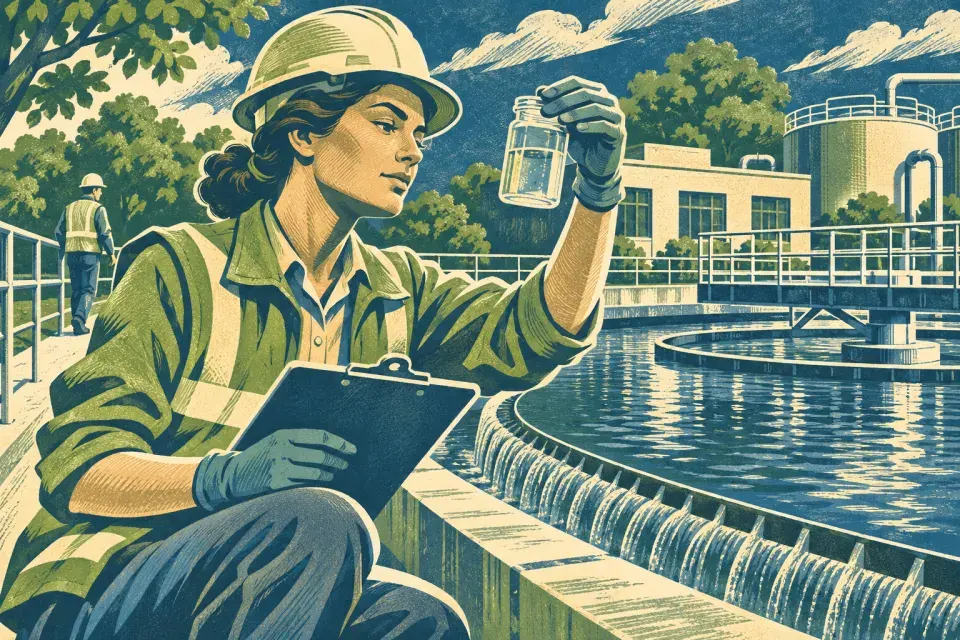
An environmental engineer may be asked why water quality has changed or whether a proposed facility can meet a discharge limit. The work starts with evidence from a particular site. It can end in a treatment design, a permit application or a monitoring plan that operators will keep using for years.
What a day can involve
- Interpret environmental measurements and identify missing information about a site.
- Compare treatment or pollution-control options against project requirements.
- Prepare technical reports and explain findings to operators, regulators or communities.
Where you might work
Engineering consultancies, government agencies, treatment facilities and field sites.
Where you can work
Industries employing this occupation in the United States, from the 2025 BLS employment matrix.
- Engineering services
- State government, excluding education and hospitals
- Management, scientific, and technical consulting services
- Local government, excluding education and hospitals
- Federal government, excluding postal service
- Management of companies and enterprises
All reported industry sectors
- Professional, scientific, and technical services
- Government, excluding state and local education and hospitals
- Manufacturing
- Administrative and support and waste management and remediation services
- Management of companies and enterprises
- Utilities
- Mining, quarrying, and oil and gas extraction
- Educational services; state, local, and private
- Construction
- Transportation and warehousing
- Other services (except public administration)
Your path in the United States
A bachelor’s degree in environmental engineering or a related engineering field is typical. Look for practical design work alongside chemistry and water or air systems. Some jobs serving the public require professional engineering licensure.
Entry requirements · U.S. Bureau of Labor Statistics
Training to explore
Compare the environmental and ecological focus of this program with a civil engineering degree if your interests include both infrastructure and ecosystems.
Environmental and Ecological EngineeringPurdue UniversityWhat to budget for
Check which field courses require travel and whether equipment or sampling supplies carry extra fees. For co-op programs, include any move between the campus and a placement.
Plan what to measure after rain
Imagine a town wants to know why a stream turns cloudy after heavy rain. Sketch the stream and two possible runoff routes. Choose locations for observations and note what you would compare on a dry day. Do the exercise on paper.
What other explanation could fit the same observations?
Sources and context
BLS reports environmental engineers separately (SOC 17-2081). Environmental scientists and civil engineers each have their own occupational figures.
BLS projects 2,400 net new U.S. jobs from 2025 to 2035. Openings to replace people who leave the occupation are a separate measure. BLS projections
- U.S. Bureau of Labor Statistics · Duties and work settings
- U.S. Bureau of Labor Statistics · Entry requirements
- U.S. Bureau of Labor Statistics · National median wage
- U.S. Bureau of Labor Statistics · Employment outlook
- Where you can work
- Purdue University · Environmental and Ecological Engineering